“The dementia courses were the most useful for me. The examples made it easier to understand why a resident may repeat the same question or become more confused later in the day. I liked that it focused on how a caregiver should respond, not only definitions.”
Rosenthal Community Care Services
Online Caregiving Education
Couldn't load pickup availability
Online Caregiver Training Courses for Assisted Living, Home Care, and Residential Care
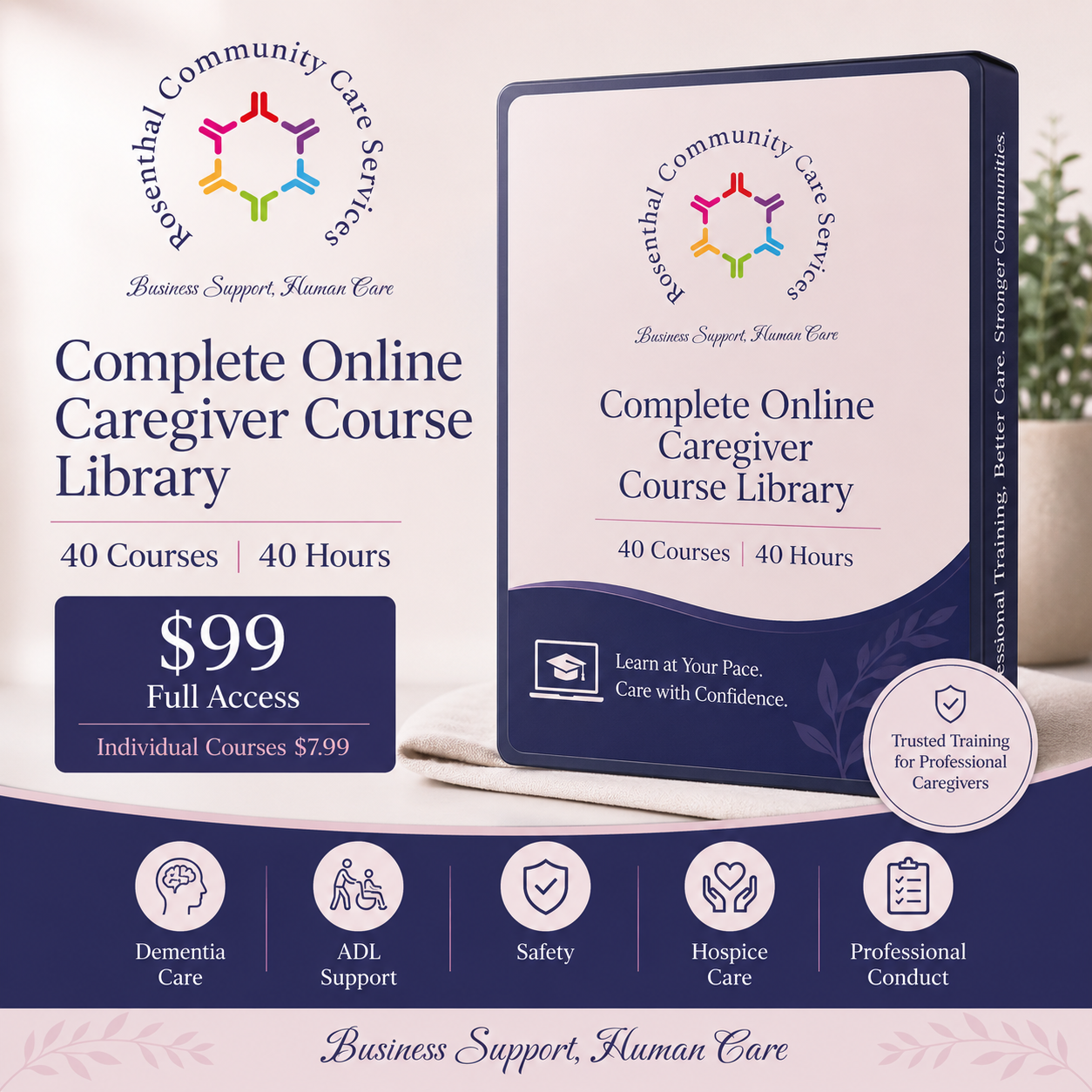
Study caregiving online with Rosenthal Community Care Services. Our 40-hour online caregiving education library helps new caregivers, assisted living staff, home care workers, private duty caregivers, and family caregivers build practical foundations in dementia care, ADL support, medication support awareness, safety, hospice comfort care, and professional caregiver conduct.
- 40 Online Learning Hours
- $99 Full Library Access
- $7.99 Individual Courses
- Available in 25 Countries
Complete Online Caregiving Education Library
This online caregiver training program is designed for people who want a strong theoretical foundation in caregiving basics for assisted living homes, residential care homes, senior care, home care, and private duty care settings. The library includes practical lessons in resident dignity, safe support, communication, observation, reporting, dementia behaviors, personal care assistance, hospice comfort, infection control, and caregiver professionalism.
Online Caregiving Courses Available in 25 Countries
Rosenthal Community Care Services online caregiving education is available in 25 countries, including the United States, Philippines, Singapore, United Arab Emirates, South Korea, Japan, India, South Africa, Nigeria, Kenya, Vietnam, Mexico, Pakistan, Indonesia, Sri Lanka, Nepal, Hong Kong SAR, and more.
What Caregivers Will Learn
These online caregiver training courses focus on practical caregiving knowledge for daily resident care, assisted living support, dementia care, safety awareness, hospice comfort care, and professional conduct. Lessons are created to help caregivers understand what to observe, how to communicate, when to report concerns, and how to provide care with dignity.
Dementia Care Training
Learn dementia basics, communication, redirection, sundowning, wandering, behavior response, family communication, advanced decline, and end-of-life dementia support.
ADL and Personal Care Support
Study bathing, dressing, grooming, toileting, incontinence care, eating, hydration, dignity, privacy, and consent during daily care.
Medication Support Awareness
Build awareness of medication assistance basics, medication refusal, observing side effects, reporting changes, and documentation awareness.
Safety and Emergency Readiness
Review fall prevention, safe transfers, fire safety, evacuation awareness, medical emergency basics, infection control, and incident reporting.
Hospice and Comfort Care
Understand hospice basics, gentle personal care, appetite changes, hydration changes, pain observation, family support, and final-days comfort.
Professional Caregiver Conduct
Learn resident rights, dignity, mandated reporting awareness, professional boundaries, communication, shift handoff, reliability, and work ethic.
Caregiver Training Keywords Covered in This Course Library
This page and course library are built around practical caregiver education topics families, caregivers, facilities, and care teams commonly search for.
40-Hour Online Caregiver Course Library
Explore the full online caregiving course library below. Each course is structured as a 1-hour online learning course. You may purchase individual courses or enroll in the full 40-hour library.
Track 1: Dementia Care Training
Foundational and advanced dementia care courses for communication, behavior response, safety, decline, hospice, and end-of-life support.
Dementia Fundamentals — Courses 1–6
Basic understanding of dementia, memory loss, brain changes, and symptoms.
Calm tone, simple words, body language, validation, and respect.
How caregivers should respond to repeated questions and confusion.
Evening agitation, environmental triggers, and calming routines.
Personal care support when a resident is resistant or confused.
Cueing, hydration reminders, safe positioning, and mealtime dignity.
Advanced Dementia Care — Courses 7–9
Agitation, yelling, refusal, suspicion, fear, and pacing.
Reducing risk, observing patterns, and protecting resident safety.
Reporting changes, documenting behaviors, and respectful updates.
Dementia, Hospice, and End-of-Life Support — Courses 10–12
Recognizing decline in eating, mobility, speech, and alertness.
Comfort-focused care, dignity, reduced appetite, and family emotions.
Gentle care, privacy, calm environment, and respectful reporting.
Track 2: ADL and Personal Care Training
Practical caregiver training for daily care, dignity, bathing, grooming, toileting, incontinence, eating, and hydration support.
ADL and Personal Care Courses
Covering dignity, ADLs, observation, and daily reporting.
How to begin care respectfully before touching or assisting.
Shower assistance, modesty, refusal, and infection control.
Clothing choices, weak limbs, oral care, and dignity.
Privacy, bathroom safety, changing briefs, and skin observation.
Meal setup, cueing, safe positioning, and intake observation.
Track 3: Medication Support Awareness
Caregiver awareness training for medication assistance basics, refusals, side effects, reporting, and documentation awareness.
Medication Support Awareness Courses
General awareness of reminders, observation, and facility policy.
What to do when a resident refuses medication or reports discomfort.
Drowsiness, dizziness, appetite changes, and mood changes.
Timing, accuracy, documentation basics, and avoiding guessing.
Track 4: Safety and Emergency Readiness
Caregiver safety training for fall prevention, transfers, fire safety, medical emergencies, infection control, and unusual incident reporting.
Safety and Emergency Readiness Courses
Fall risks, clutter, footwear, lighting, and bathroom safety.
Transfer preparation, body mechanics, and wheelchair safety.
Fire drills, alarms, exits, and resident supervision.
When to call 911, staying calm, and notifying responsible parties.
Handwashing, gloves, cleaning, laundry, and illness prevention.
Falls, injuries, behavior changes, and documentation basics.
Track 5: Hospice and Comfort Care
Comfort-focused caregiver training for hospice basics, gentle personal care, appetite changes, pain observation, family support, and final days care.
Hospice and Comfort Care Courses
What hospice means, comfort-focused care, and role awareness.
Bathing, repositioning, privacy, and emotional sensitivity.
Reduced appetite, swallowing concerns, and family expectations.
Recognizing signs of discomfort and reporting changes.
Respectful communication, boundaries, grief, and calm presence.
Quiet environment, privacy, cultural respect, and professional behavior.
Track 6: Professional Caregiver Conduct
Professional caregiver training for resident rights, mandated reporting awareness, boundaries, communication, documentation, reliability, and work ethic.
Professional Caregiver Conduct Courses
Respect, choice, privacy, autonomy, and avoiding shame or force.
Warning signs, caregiver responsibility, and reporting concerns.
Gifts, family relationships, privacy, and emotional boundaries.
What to say, respectful updates, and proper escalation.
Clear notes, meaningful observations, and continuity of care.
Professionalism, punctuality, teamwork, and resident-centered service.
What Caregiving Students Say
Students use RCCS Online Caregiving Education to build practical knowledge across dementia care, hospice and comfort care, medication support awareness, safety, ADLs, and professional caregiver conduct.
“I took the hospice lessons because that was the area I felt least prepared for. The material was calm and practical, especially the sections about comfort, appetite changes, family emotions, and what a caregiver should observe and report.”
“Very helpful especially the medication topics. The lessons were easy to follow and not too technical. I was able to study after work and finish at my own pace.”
“good study materials”
Frequently Asked Questions About Online Caregiver Training
Who should take these online caregiving courses?
These courses are designed for new caregivers, assisted living caregivers, residential care staff, home care workers, private duty caregivers, family caregivers, and individuals preparing for caregiving roles.
Is this course library available outside the United States?
Yes. Rosenthal Community Care Services online caregiving education is available in 25 countries, including the United States, Philippines, Singapore, United Arab Emirates, South Korea, Japan, India, South Africa, Nigeria, Kenya, Vietnam, Mexico, and more.
How much does the full online caregiving course library cost?
The complete 40-hour online caregiving course library is available for $99. Individual courses may also be purchased for $7.99 each.
Are these state-approved continuing education courses?
These courses are intended for caregiver education, personal growth, and facility training support. They are not advertised as state-approved continuing education, licensing courses, or certification programs unless specifically identified as such.
Start Your Online Caregiving Education Today
Build practical caregiving knowledge in assisted living care, home care, senior care, dementia support, ADL assistance, medication support awareness, safety readiness, hospice comfort care, and professional caregiver conduct.
Share